I did not know him for very long — or know him very well.
We first met in 2023 when I was travelling from Arunachal to Assam — while reporting on Vantara — and had decided to stop at Kaziranga for a day instead of rushing back to Guwahati. There were a couple of small leads to chase down + it made little sense to get this close to Kaziranga without visiting (sometimes, it is good to see what we fight for).
A friend suggested I stay at Wild Grass. I forget which friend. I call from the nearest railway station. I forget which one. But I remember Mr Barua, with whom I had only chatted briefly on phone to make a reservation, talking to the cab guy, giving him directions, and us then heading to Wild Grass. I remember taking about two hours to reach, reaching at dusk, and running into Mr Barua shortly thereafter.
A man in his sixties, with a long beard and amused eyes; a diabetic who had figured that the best way to meet the doctor’s instructions for multiple small meals through the day was to get his hotel staff to supply him with his favourite snacks through the day (how one loves people like this, who respond to life’s slings with mischief of their own); a property which had ceded ground to newer, fancier resorts and now derived a chunk of its occupancy by renting rooms to Numaligarh refinery nearby, but carried a weighty history (Wild Grass was the first resort to come up in Kaziranga — during the ULFA years, at that); my room for the next couple of nights in a wooden building that was run-down but, hell, had large windows on three sides; and food that was divine.
In that first trip, we sat at a table each evening on the verandah outside his restaurant and an unstructured chat followed, me talking about my then-inchoate report and him talking about Wild Grass and Kaziranga, about how he had met Assam’s CM to get approvals for Wild Grass. I forget which CM.
The mind forgets the inessential and holds onto the important. I met Manju Barua again, during a subsequent trip. And I met him again last November — that was on a holiday to Kaziranga. That is three meetings and a few phone conversations. But, the first meeting itself was enough to figure this was a wise man; a person one should turn to for advice; a person who had seen life; seen pain; learnt it is better to be light-hearted; and had retained his sense of surprise at the stupid things the world gets up to. I forget the number of times when he would ask, his face creasing with a smile, a variant of “Really? Is that what happens?”
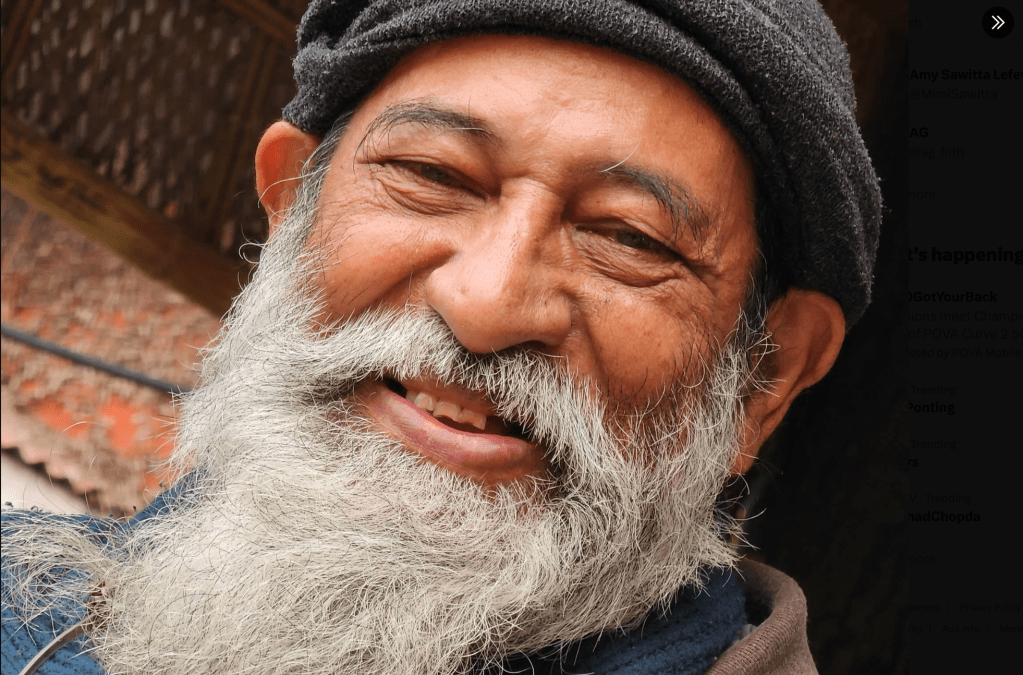
Which is not to say he was not acute. Talking about people who own elephants, he had said something no one else in the elephant trade had expressed till then. “People who own elephants have deep pain in their eyes,” he had said. These are not, as I now remember him saying, easy animals to keep. Another time, in that first trip, he alluded to a song from Dosti: “Raahi manwa dukh ki chinta kyun satati hain/Dukh to apna saathi hain.” A like-minded soul, I thought; downloaded the long-forgotten song into my phone soon thereafter; and didn’t let Manju Barua become one more person I had met but thereafter lost touch with.
It goes without saying that he knew Kaziranga well. For our trip to Kaziranga in November 2025, once I called to tell him our party of three was trooping over, a flurry of emails and phone calls followed. We were flying into Jorhat. And so, the first email suggested we spend a night at the Hoolock Gibbon Sanctuary either on our way to Wild Grass or on our way back to Jorhat. When we wanted to see dolphins, he tweaked that plan to add a night halt near Tezpur in what was a three night trip. And then he called, for a long chat — this is while I was cycling towards goa — to discuss the trip. The desire that we see as much of Kaziranga as possible, especially how the park was changing under human pressure and state apathy, was strong.
I am now rereading that email and marvelling, yet again, over his understanding. And also the quirk of personality which made him so unassuming. “NOW sorry for the intervening by writing the note below,” says his note, before adding this about Hollongapar Gibbon Wildlife Sanctuary. “Though a plantation it looks like a natural forest with all storeys of canopy extant. It’s a natural looking rain forest and surely worth a visit. The sanctuary is now insular and has no connectivity with larger forest belt. But earlier it had contiguity with Disoi Valley Reserved Forests (RF) Disoi RF, Tiru RF and Geleki RF bordering Nagaland and was the natural abode of all these primates. Due to large scale human induced degradation especially from Nagaland the Gibbon Sanctuary is what is left.” How deep his understanding ran can be gleaned from the fact that this email was 1,712 words long, replete with information not just about the forest’s ecological history but also granular details on the pluses and minuses of stay options.
One saw this again and again. In the night before we left for Tezpur, he told us about a geological oddity of the two hills before the town. Talking about the plan to see dolphins, he spoke about how the riverine islands in the Brahmaputra were changing — and how locals were leaving cattle there to keep them safe from predators. While we were there, he had opened Wild Grass to an NGO teaching painting to children and enjoyed watching his restaurant get taken over by kids tracing/painting nature onto their sketch pads. This benevolence was a pattern. “Barua was also respected for introducing humane practices in the hospitality sector,” writes NE Now in its obituary. “At a time when such initiatives were uncommon, he ensured separate accommodation and free meals for drivers and guides accompanying tourists, a gesture widely appreciated within the tourism community.”
He died of a heart attack. It seems to have been sudden. “We had spoken over the phone at 7.50 am, and he was coughing, and said he felt ill but otherwise alright,” says Dilip Simeon’s obituary. “At around 1 pm I learned from another old friend that he had passed away.”
I did not know him for very long — or know him very well. I didn’t know, for instance, that he went to Stephens or what his life was like. But the loss is real enough for me to be sitting up late this night, scant hours after the news, trying to jot down my memories of the man. More than anything else, he was a guide. A man who had seen life and rapacity and was sadder and wiser but determined to not let any of it change him.
Shashi Rajagopalan. Samir Acharya. Abhijit Sen. And now, Mr Barua. Life continues to get poorer.
Photo credit: Nirmal Ghosh.
PS: Recently bought a book about our digital afterlifes, on what will stay on — given the vagaries of memories and the internet — after we are gone. I have, as I was thinking, one such artefact from Mr Barua. This email he sent:
Dear Rajsekhar
Corect decision
booked the rooms accordingly
Also you have an option ref
you are flying into Jorhat
NOW sorry for the intervening by writing the note below :-
Near JORHAT airport are tea garden bungalows and good homestays so when you come from far England to Kaziranga you can rest on Day 1 that is and next day do Gibbon Sanctuary and see Hollock Gibbon which is the only ape available in India. Gibbon activity ends by 9 am and move to Kaziranga it is 128 km to Kaziranga 2 hours
NEAR JORHAT AIRPORT is the Hollongapar GIBBON WILDLIFE SANCTUARY
DAY VISIT TO HOLLONGAPAR GIBBON WILD LIFE SANCTUARY EX-KAZIRANGA
It does not take long to do Gibbon WLS Usually people do it ex Kaziranga they take a hired vehicle to go to Gibbon WLS and leave very early 4 am so they reach the place 128 km (2 and half hours) and then Gibbon activity is over by 9 am and they come back to visit Eastern Range in Kaziranga on same day. Or better still return and do Orchid park in Kaziranga same day. You cannot enter by vehicle Walks are allowed and in very early morning Gibbons are easily sighted
Hollongapar Gibbon Wildlife sanctuary : 20. sq km Sanctuary. Actually it is the oldest miscellaneous plantation having Dipterocarpus and Mesua as dominant species It was declared a Reserve by the British way back in 1881,(53 years after the advent of British rule) The original forests used to extend to the foothills of the Patkai mountain range. Since then, the forest has been cleared mainly for tea growing by the British (1896 dereserved certain patches) and in 1960s people from Majuli were settled here and so small villages.have come up also. So now it is a small tropical wet forest 20 sq km in size.
The place is easily accessible and has 7 species of primates. Walks are allowed and Hollock Gibbon easily sighted. The area has Northeastern India’s only nocturnal primate – the slow loris But you have to stay overnight in Gibbon itself to see the slow loris. The accommodation is basic inside Gibbon.
In this small wildlife sanctuary where only walking is allowed there is a presence of pig tailed and stump tailed macaque which can be sighted with moderate luck. In winter (starting late October) it is good for forest birds, several species of forest butterflies and giant squirrel. The dense forest makes it difficult to see too many birds but you may manage to see the Dark-necked tailorbird, Orange-headed Thrush and Grey-bellied Tesia. Our guides claim that in the main road cutting through this small sanctuary more than 100 species of butterflies can be identified in the months of Oct and November as also in March-April This sanctuary is now a small tropical wet forest Actually it is the oldest miscellaneous plantation having Dipterocarpus and Mesua as dominant species and is easily accessible and has 7 species of primates.
Walks are allowed and Hollock Gibbon easily sighted. There is a presence of pig tailed and stump tailed macaque which can be sighted with moderate luck. In .winter (starting late October) it is good for forest birds several species of forest butterflies and giant squirrel.More than birds in the main road cutting through the small sanctuary more than 100 species of butterflies can be identified in the months of Oct and November Butterflies not in mid December when you are coming Butterflies can be seen also in March-April
Though a plantation it looks like a natural forest with all storeys of canopy extant. It’s a natural looking rain forest and surely worth a visit.The sanctuary is now insular and has no connectivity with larger forest belt. But earlier it had contiguity with Disoi Valley Reserved Forests(RF) Disoi RF, Tiru RF and Geleki RF bordering Nagaland and was the natural abode of all these primates. Due to large scale human induced degradation especially from Nagaland the Gibbon Sanctuary is what is left. A pocket herd of elephant is largely resident in this sanctuary and leopards are also found. Sighting of the groups of primates requires prior arrangement with forest authorities tracking them.(we will do this) in this unique forest It is the best place for orienting a naturalist to the representative rain forest habitat condition coupled with interesting primate sighting especially the Hollock Gibbon which is the only ape available in India. Photographers usually try their luck and are successful in photographing the Gibbon
You have to reach Gibbon WLS area very early in the morning as a matter of fact from Wild Grass visitors must set off by 4 am latest It is best to set out early before sunrise to be in time to view the primates mainly the Hollock Gibbon the only ape available in India. After Gibbon our guests return (9 am) to Forest Inspection Bungalow have breakfast and be in Kaziranga for afternoon jungle visit. So in the nearby tea garden bungalows which is also near Jorhat airport (30 km or so) both the tea garden places of stay and the airport is near Gibbon Wildlife sanctuary 30-40 km. You could do (i) on 16th start early from Wild Grass and arrive Gibbon by 5.30 am do Gibbon we will arrange for you stay in Gibbon Forest Bungalow and then take flight out at 2.30 or whatever (ii) cut off one night stay in Kaziranga and halt in Gibbon area You could leave late after doing Kaziranga
Places to stay near Gibbon Sanctuary and Jorhat airport.
Besides the Hollock there is the capped langur more sure in Gibbon then in Kaziranga (you get capped langur sighting in Kaziranga best is in Kanchenjuri (see note on Ghorakati Range) but not as sure as in Gibbon (90% sure ) But real best capped langur sighting is in Nameri National park 125 km from Kaziranga you get it in the Eco Camp which is a tented camp place to stay in Nameri National Park (Background info at the end of this email)
Staying in the Inspection Bungalow in Gibbon was the best. But it is basic And I have not gone there since it was newly built enthusiastic wildlifers do prefer it as it is inside the Reserve Forest (if you are visiting Gibbon by leaving Wild Grass on 16th morning then halt and rest in Gibbon Forest Bungalow because this will be a tiring day you will take a flight to Kolkata and then evening flight to Bangalore)
Next place to stay near Gibbon is 45 minutes away is best though pricey known as Thengal Manorits very good but pricey. Thengal is an old residence of of a tea planter called Rai Bahadur Shiva Prasad Barooah, who in the 1930s was the richest Indian tea planter, and he built Thengal House as his personal residence in 1929. His son H.P.Barooah renovated it in 1964. The first Assamese daily newspaper ‘Dainik Batori’ was published from this mansion in 1935. The house was built in the old bungalow style of North India (not like ones built in Assam after the 1897 earthquake) that was used by the British for the administrative offices, with passages right around the building to resist humidity and keep the interior’s cool. Chinese masons built the mansion with its thick brick and lime-mortar walls. The mansion is situated in a five acre plot near an Assamese village and a prayer hall is situated in the compound. The rooms are airy and each of them has the old style fireplace.It was for a brief period (not now) under the aegis of Welcome Group of hotels cost is about Rs 8500 with breakfast. Thengal is 15 km from Jorhat airport takes 30 minutes. .Thengal Rs 8750 (nett) breakfast complementary.
Kindly talk to them or we can do same about booking
(If staying at Thengal write to Doreen Jones djones@barooahs.com or to Mrs Uttara Gogoi at Jorhat, e-mail address : uttara@barooahs.com phone no. +91 94355 14177.They also own Kaziranga Golf Course etc They now do through booking. Com WE CAN HELP IN THIS MATTER)
Another place are tea garden bungalows two of them one is known as the Burra sahib Bungalow and the Banyan Grove in the Gotonga Tea Estate owned by the same people who own Thengal Manor The Gotonga Tea Estate (757 hectares, more than half the area under tea) has a factory, which allows visitors and conducts factory visits for those who stay in Thengal and Burra sahib Nowadays Burra Sahib is known as Kaziranga Golf Club as the owners built an 18 hole golf course there. Both are a bit pricey. Kaziranga Golf Course is 38 km from Gibbon because of road it takes about 55 minutes.Rates of these places are at par with Thengal For Thengal and these properties we can do for you or you too can write direct to their representative uttara@barooahs.com Jorhat airport is about 30 km from these places and takes 40 minutes These are 74 km from Wild Grass takes about 1 hour 20 minutes.
There are some basic and neat places near Gibbon where you can halt also Gibbon Guest house5 room and dormitory.Call Diganta Gogoi 9954403770 It is all round best place in a simple manner stay if you have no luxury issue for Gibbon visit 9954403770 or 9435489796 It is all round best place in a simple manner stay if you have no luxury issue for Gibbon visit E mail: mail@gibbonresort.com Web site www.gibbon resort.com It is slightly mid level pricey. But good and near Gibbon (highly Recommended)
Also bed and breakfast B & B ” Puroni Bheti Lodge ” It is a Tea Garden Heritage House located in a tea Estate and belongs to the same family i.e. another of Rai Bahadur Shiva Prasad Barua’s grandson whose ancestral property was Thengal Manor and the e-mail is rajibbarooah@yahoo.co.in. Little far from Gibbon (but highly recommended) Tea garden Bungalow
HOME STAY NEAREST TO GIBBON SANCTUARY IS :- GIBBON ECO CAMP Call +91-7002614408 (recommended) NOT Tea garden Bungalow
I think it is important for you to visit Gibbon WLS and cut off one day from Kaziranga stay. It is better if you did it on day prior to your departure ie on 15th December then while you are here we can discuss this matter
Achintya (Manju) Barua
Contact Kaziranga
The Wild Grass Office in Kaziranga has a mobile ask for Manju Barua 9954416945
mobile +91-9954416945
No watts app number
God grant me the serenity to accept the things I cannot change The courage to change the things I can And the wisdom to know the difference.
 Fractured/Earth
Leave a comment