so much of this article makes sense to me. i miss the early days of blogging in india. i grouse at this barrage of trivia (and the attention deficit disorder it induces). as a reporter in this internet age, i wonder about these social media algorithms pivoting around, as the piece says, newness and popularity which have left the information my peers and i bring out facing a very unknown social life. how do these articles travel? given that everyone is neck-deep in news/trivia, how much of our stuff gets read?
by the end of the december bike ride, i had decided to slow down. to spend less time on twitter, check email less often, buy fewer books, certainly not rush to buy new books but wait to see if their fame survives even when the hype cycle exhausts itself, to get the brain to spend longer on discrete (and hopefully meatier) thoughts, and — this is connected through the notion of focusing on more real things — learn to carry out more complex repairs on the cycle like trueing its wheels.
at the end of the scroll project, i have to reach some conclusions re the utility of reporting in this age where social media is strong, the public seemingly more inwards-looking and our regulators (who are supposed to give the press its muscle by acting on its reports) decidedly indifferent.
the brain is idly dreaming of a cycling trip at the end of the scroll assignment.
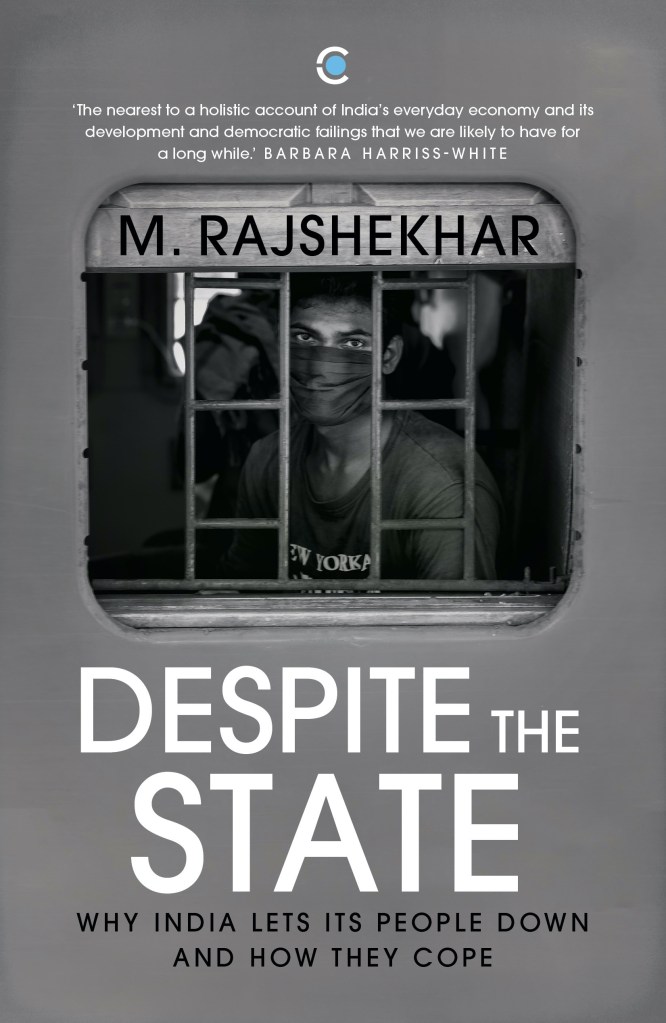
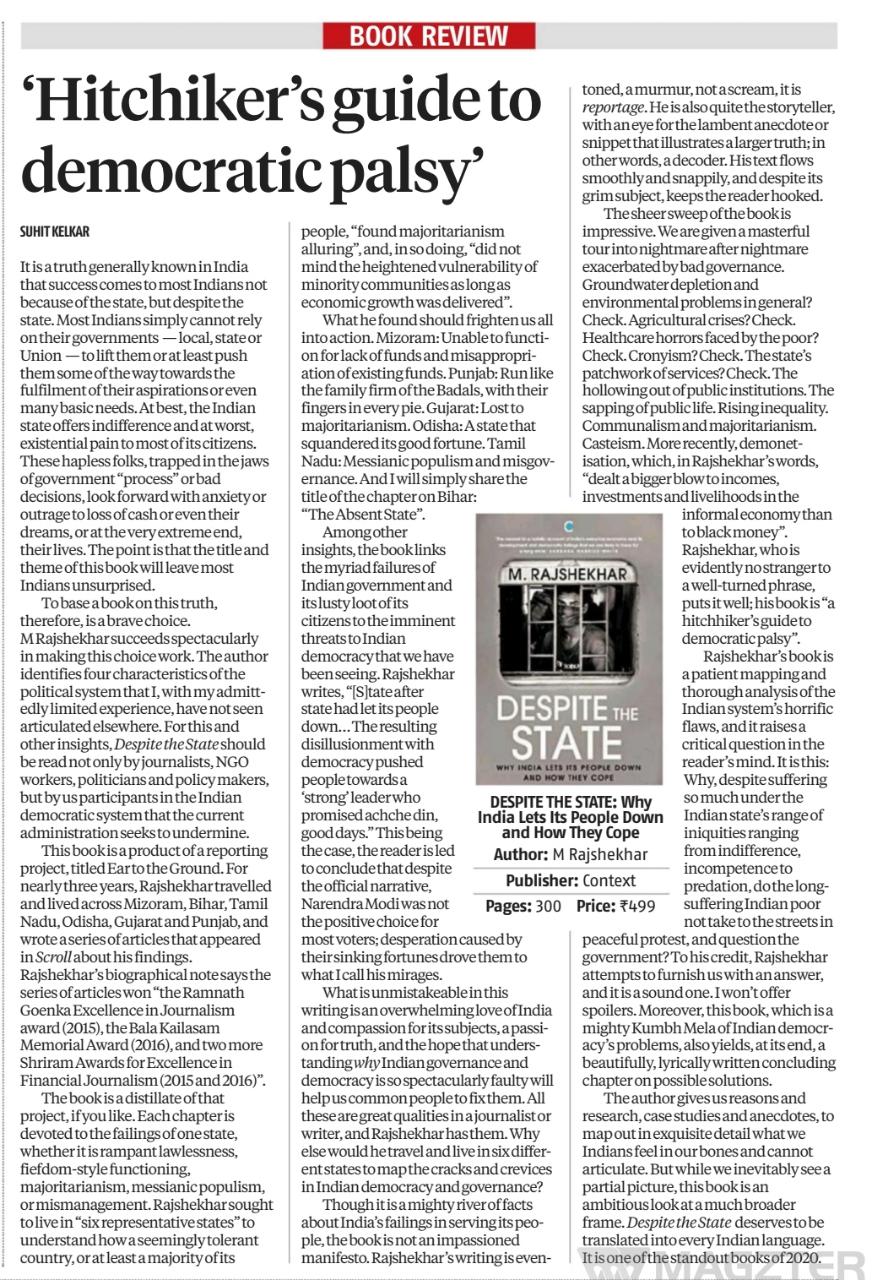
I am an Indian journalist with interests in energy, environment, climate and India’s ongoing slide into right-wing authoritarianism. My book, Despite the State, an examination of pervasive state failure and democratic decay in India, was published by Westland Publications, India, in January 2021. My work has won the Bala Kailasam Memorial Award; the Ramnath Goenka Excellence in Journalism Award; five Shriram Awards for Excellence in Financial Journalism; and, more recently, been a finalist at the True Story Award and GIJN’s Global Shining Light Awards. Write to me at despitethestate@protonmail.com.
“Westland closure: Titles that are selling fast and a few personal recommendations,” by Chetana Divya Vasudev, Moneycontrol. (Because this happened too. In February, a year after DtS was released, Amazon decided to shutter Westland, which published the book. The announcement saw folks rushing to buy copies of Westland books before stocks run out.)
 Fractured/Earth
Leave a comment