(i was on leave between the 12th of June and the 5th of July. a close friend was getting married in toronto. and so, i took about 25 days off and travelled in bits of canada and the uk)
**
destination number one was a village called tadoussac. on the western bank of the st lawrence river in canada’s quebec province, it is a place where whale sightings are said to be common. as they indeed were. i saw a few minkes and belugas. i saw a subadult humpback. and i saw a few seals.
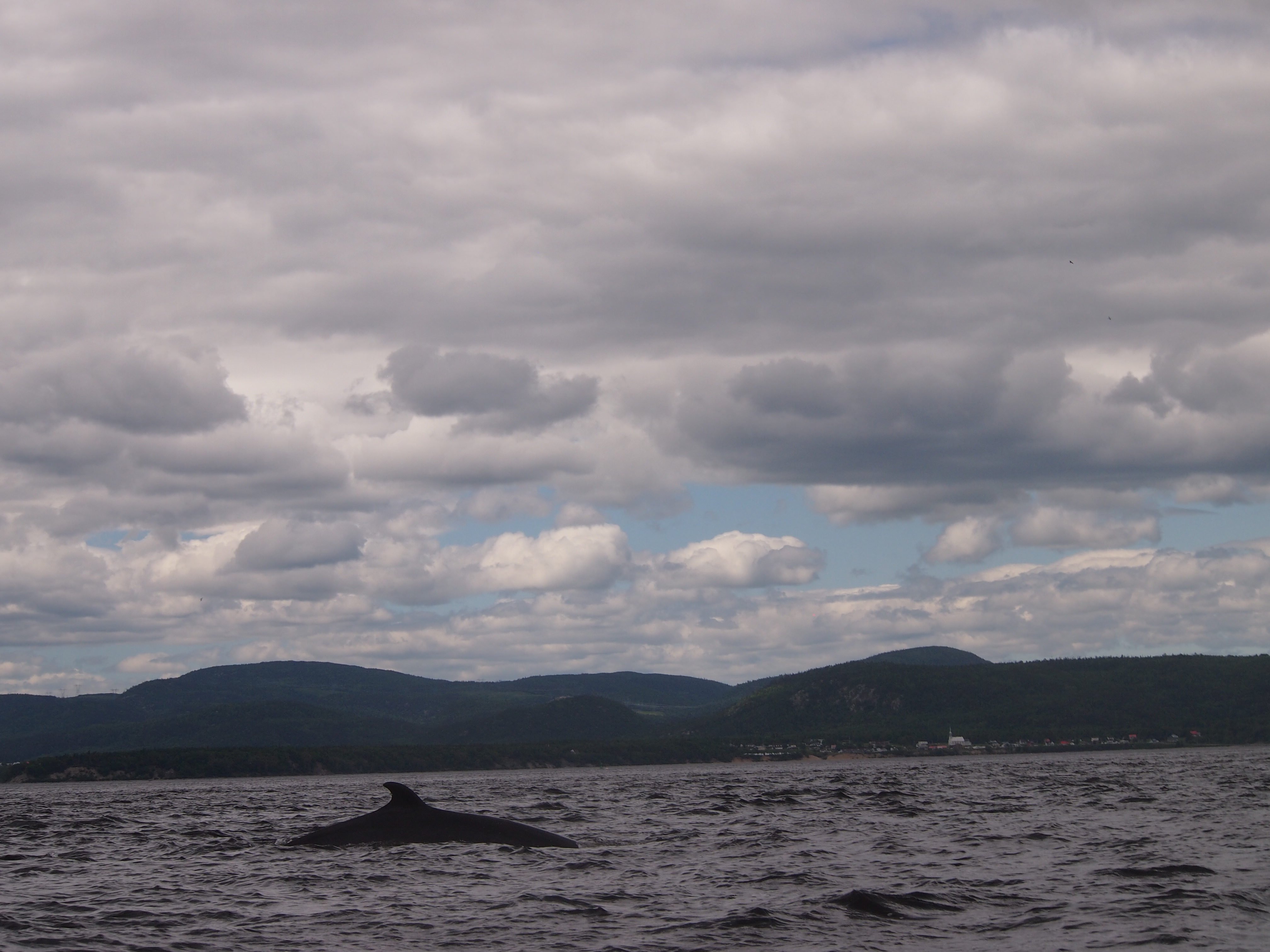
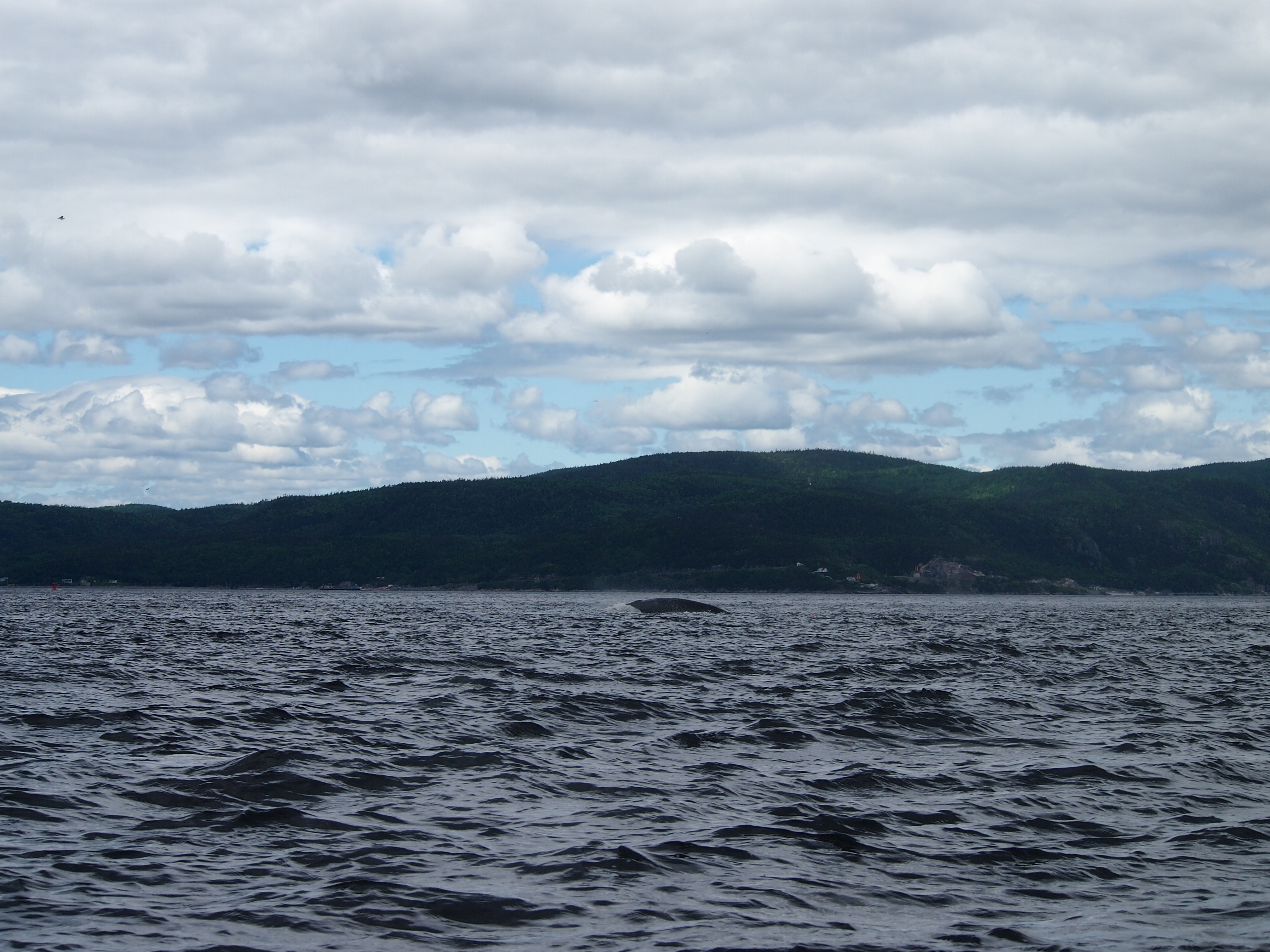
funny business, venturing forth to see species. it is much the same as tiger-spotting in india. you get into a vehicle — which might range from a ship to a 12-seater zodiac — and its pilot steers to the sites where whales are commonly seen. sooner or later, you see some. these are not particularly educative excursions. a fin curving backwards, set in the middle of the whale’s back, appeared to suggest a minke, a white whale is a beluga, a spout (the cloud of exhalation), a long, sloping fin set in the whale’s lower back appeared to indicate a humpback. but that is pretty much all you glean.
it makes me wonder why one even sets forth. is it to be able to come back and boast about the species one saw? or to add to the tally of species one has seen? or is it to, as david quammen argued once in an essay, to feel comforted that the animals are around, and the the ecosystem is fine?
definitely not the last. see fauna near human settlements and it is easy to feel one has stumbled upon an idyll where animals and humans can coexist amicably. which is what i thought. only gradually did my ideas evolve. mainly after i read — towards the end of my trip — ‘sea of slaughter’ by farley mowat, a canadian naturalist. the book, a history of animal life in the north atlantic, has extraordinary tales about the north atlantic and the st lawrence itself.
“…the gulf of st lawrence and the living waters overlying the continental shelf from cape cod to labrador were among the foremost of the world’s seas for their concentrations of marine mammals. besides providing a haven for one of the planet’s largest concentrations of walrus, they harboured untold numbers of seals of several species. yet all of these were dwarfed into relative insignificance by the whale nations, which included almost every extant species of great whale together with many of the smaller kinds. it was not for nothing that some early europeans referred to the northeastern approaches to the new continent as the sea of whales.”
according to mowat, the plankton-rich waters of the sea of whales attracted the whales during the summer months. as summer ended, some, like the right whales, drifted southwards towards florida and the gulf of mexico. according to written sources from the time, he says, they were numerous.
“whales were so abundant on the northeastern seaboard and their presence was so all-pervasive that they posed problems for early voyagers. a record penned by an anonymous mariner of the mid-1500s complains that the worst risk to navigation in the new founde land was not fog, ice or uncharted rocks — it was whales of such size and in such numbers that collision with them was an ever-present danger. in the early 1600s one french missionary reported testily that whales were still so numerous in the gulf of st lawrence that “they became very tiresome to us and hindered our rest by their continuous movement and the noise of their spoutings.””
the rest of the story is pretty well-known. whaling began. and soon, each of these species had been hunted close to extinction. i did not realise this at the time i was in the zodiacs, bobbing up and down with the waves, going oooh every time a whale surfaced, but what i was seeing was a ghostly simulacrum of what used to exist.
like i said, in the summer of 2014, about 400 years after whaling began, i saw a few minkes and belugas. i saw a subadult humpback. and i saw a few seals. a slow recovery, if that.
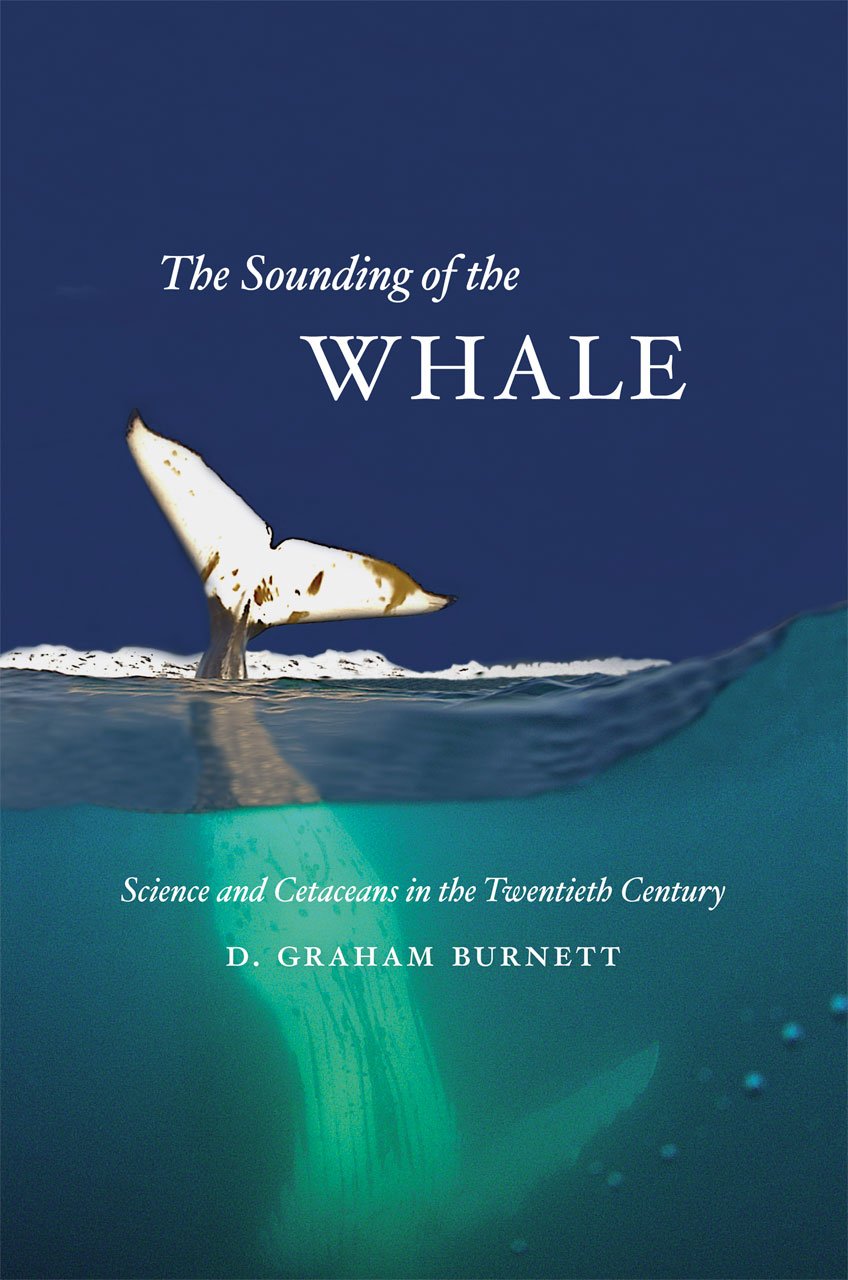 as for the remnant populations, whale watching, with its outboard engines, churning propellers, and boats heading wherever a whale has been seen, must be a disturbance. in her book on killer whales, eva saulitis, talks about the harassment of killer whales by tourist boats. (her book, “into great silence”, is an uncommonly reflective book on killer whales, scientific research and extinction (thanks to exxon valdez). it was one of three books i bought on whales. the third — the first is the mowat — is called “the sounding of the whale“. i just started on it and it is proving to be rather absorbing.
“so let me start again. this is a book about knowledge of whales. and to be still more precise, it is a book about knowledge of whales garnered and mobilised by experts over the course of the twentieth century. experts like the two men who appear in the epigraphs for this introduction, two whale scientists… whose labors — one slogging through the gruesome residue of a whaling station with knife and notebook, the other bronzing himself on the bow of a hydrophone-equipped sailboat in the indian ocean — mark out the chronological (and perhaps also the spiritual) endings of this book as a whole. two whale scientists pursuing knowledge of whales in different ways, at different times, for different purposes. their work and its effects — that is my subject.”
**
this is also where references to landscape and memory comes in. today, tadoussac is regarded as a place with whales. its past, one of far greater riches, slowly sinks out of sight. which is what george monbiot calls the ‘shifting baseline syndrome’ in feral, his book on rewilding. what we see becomes the new ‘normal’.

 Fractured/Earth
Leave a comment