Reportage on a planet without equitable or sustainable development.
The Great Forest Cover-Up
In February, the latest instalment of a little environmental kabuki played out when the Forest Survey of India (FSI) released its biennial report card of forests. It declared India’s forests were in fine fettle, with a net addition of 1,128 sq km, or 0.16%, in the last two years.
At 692,000 sq km, forests covered 23% of India’s land, and were directionally headed to reach the targeted 33%. What the Dehradun-based FSI did not declare, and tucked it away in definitions and methodologies, is how it computed that number. Take the very definition of ‘forest cover’ it has used since 2001. The FSI breaks up land into 1-hectare plots (100 metres by 100 metres) and looks at their satellite images. If tree canopy covers more than 10% of a 1-hectare plot, the FSI classifies it as a forest, regardless of who owns it, for what purpose and what kind of trees it has.
1n 2006, there was a large outcry when we realised that the environment ministry had been fibbing about tiger numbers. Well, something similar is happening with India’s forests as well. The definition that the FSI follows is so expansive that it counts tea and coffee plantations, orchards, parks and timber plantations, among others, as forests. At a time when forests are under increasing pressure, this definition (and previous methodological alterations) have enabled india’s forest establishment to claim India’s forest cover is rising. The complete story here. A PDF of the page, here.
[…] was unfinished business. Back in 2012, while in Economic Times, I had first taken a closer look at the forest cover numbers p…. It was the old question. Despite rising human pressure, why were its estimates of India’s […]
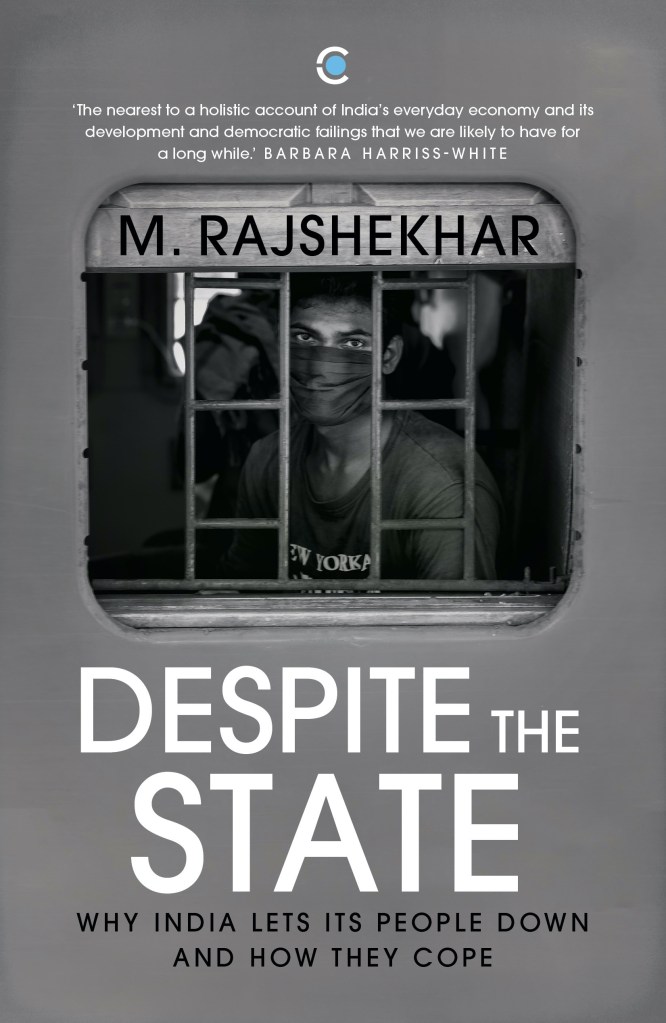
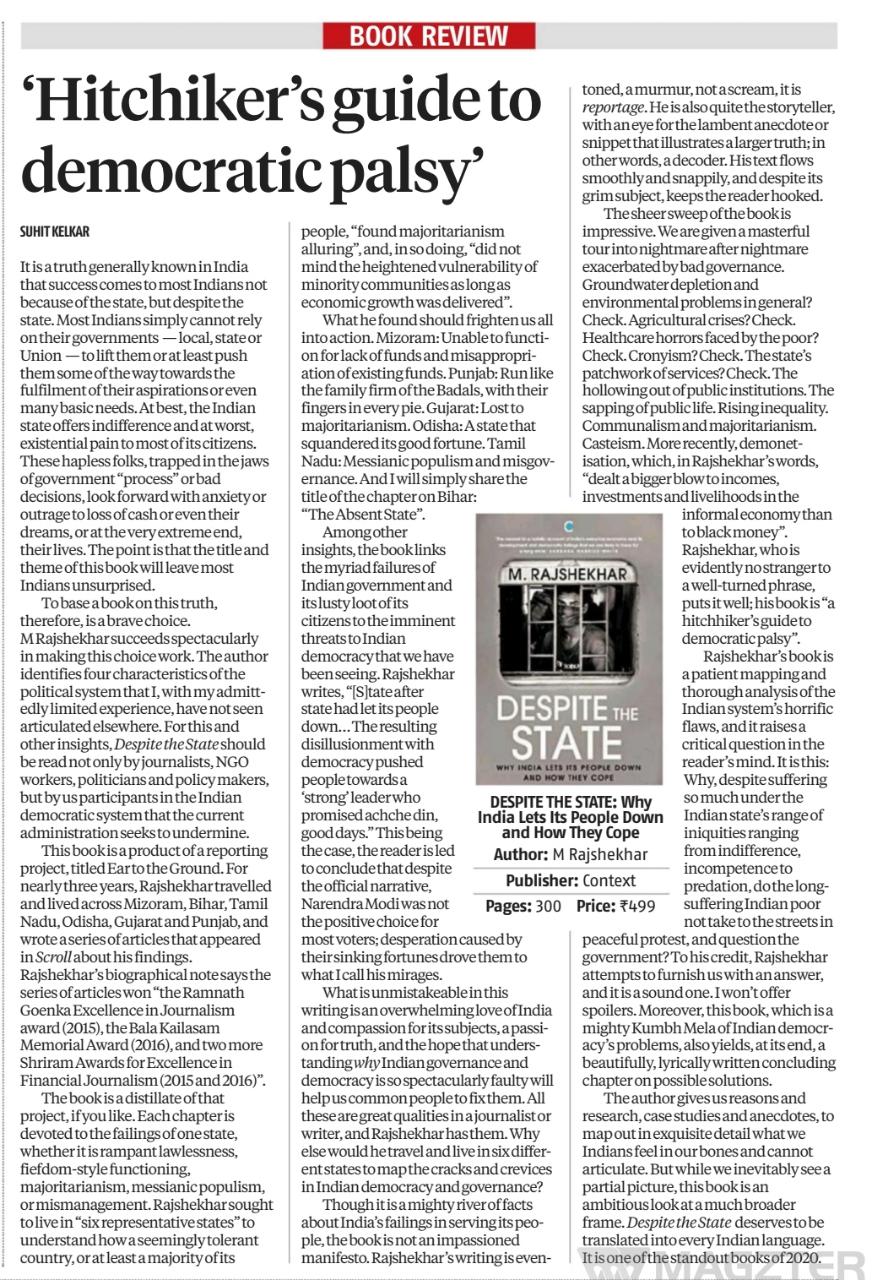
I am an Indian journalist with interests in energy, environment, climate and India’s ongoing slide into right-wing authoritarianism. My book, Despite the State, an examination of pervasive state failure and democratic decay in India, was published by Westland Publications, India, in January 2021. My work has won the Bala Kailasam Memorial Award; the Ramnath Goenka Excellence in Journalism Award; five Shriram Awards for Excellence in Financial Journalism; and, more recently, been a finalist at the True Story Award and GIJN’s Global Shining Light Awards. Write to me at despitethestate@protonmail.com.
“Westland closure: Titles that are selling fast and a few personal recommendations,” by Chetana Divya Vasudev, Moneycontrol. (Because this happened too. In February, a year after DtS was released, Amazon decided to shutter Westland, which published the book. The announcement saw folks rushing to buy copies of Westland books before stocks run out.)
 Fractured/Earth
Leave a comment